01
Context boundary
What partner object triggers work, what fields are durable, and what should stay in the source system?
 OrgX MCP
Use this surface to talk through a possible OrgX integration with a partner product such as Attrove, customer success, product ops, or sales. The conversation is simple: what context arrives, what OrgX creates, what the partner reads back, and where human approval stays in control.
A customer signal, product request, account risk, or internal workflow moment with enough context to name the outcome and owner.
Workstreams, milestones, tasks, owners, and an idempotent ref map the partner can store against its own object.
The integration checks pulse, chronicle, receipts, and gaps before telling a human that work moved.
The walkthrough is built around the minimum questions that determine whether an integration should exist.
What partner object triggers work, what fields are durable, and what should stay in the source system?
Which workstreams can OrgX scaffold immediately, and which actions require explicit human approval?
What evidence counts as done, how does the partner read it back, and what gaps should remain visible?
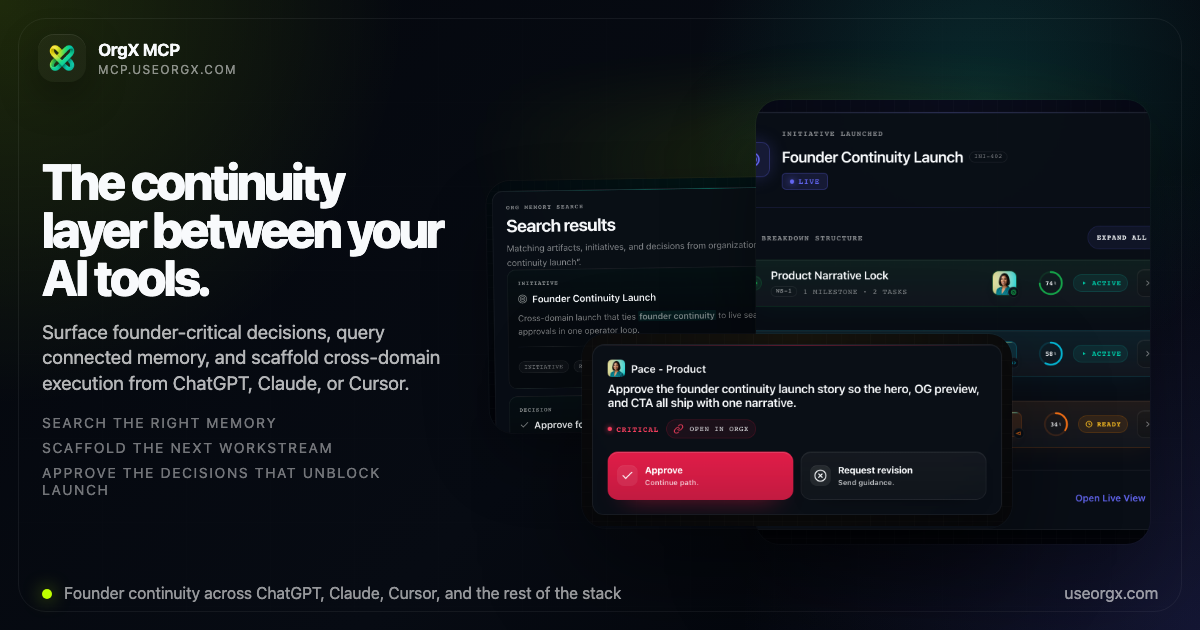
Product proof should stay visible: context in, scaffold created, decision surfaced, receipt returned. If a step is missing evidence, OrgX should show the gap instead of smoothing it over.